Architecture Design & Interior Design / Purbalingga, Central Java
Location : Purbalingga, Central Java
Site Area : - m² , Building Area : - m²
Year : -
Project Type : Architecture Design, Interior Design
Categories : Residence
Services : Conceptual Design, Construction Drawing
Built
100%
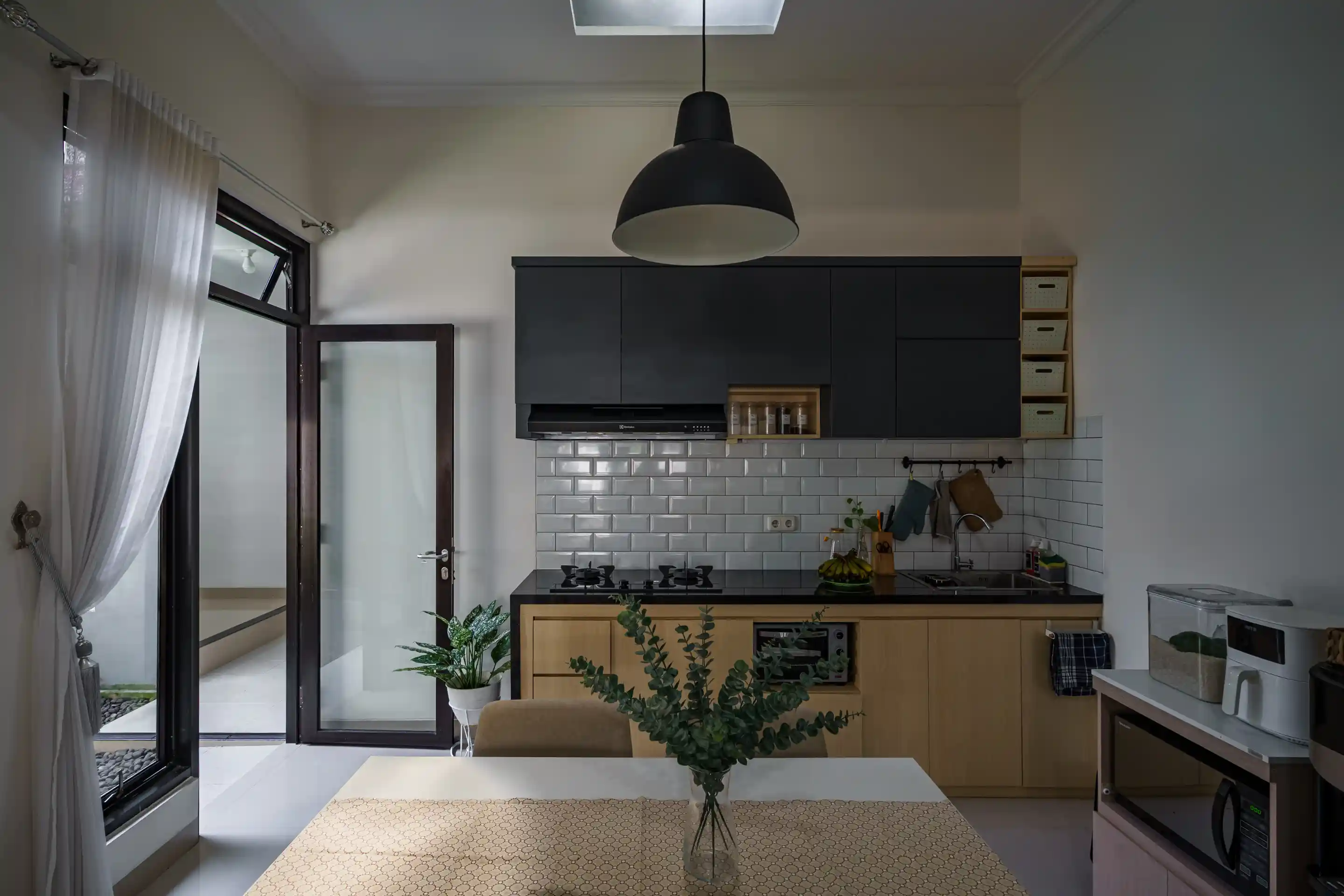
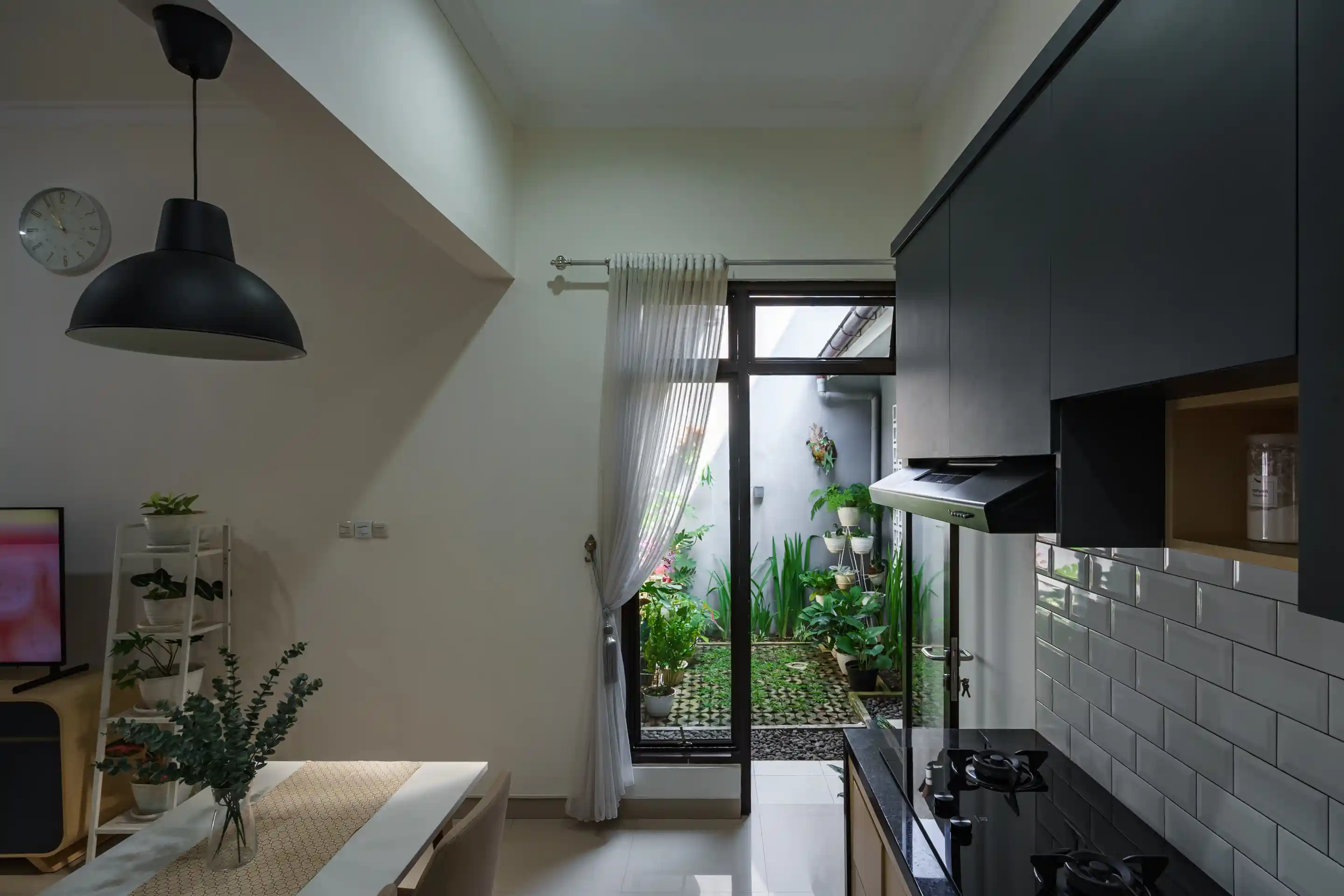
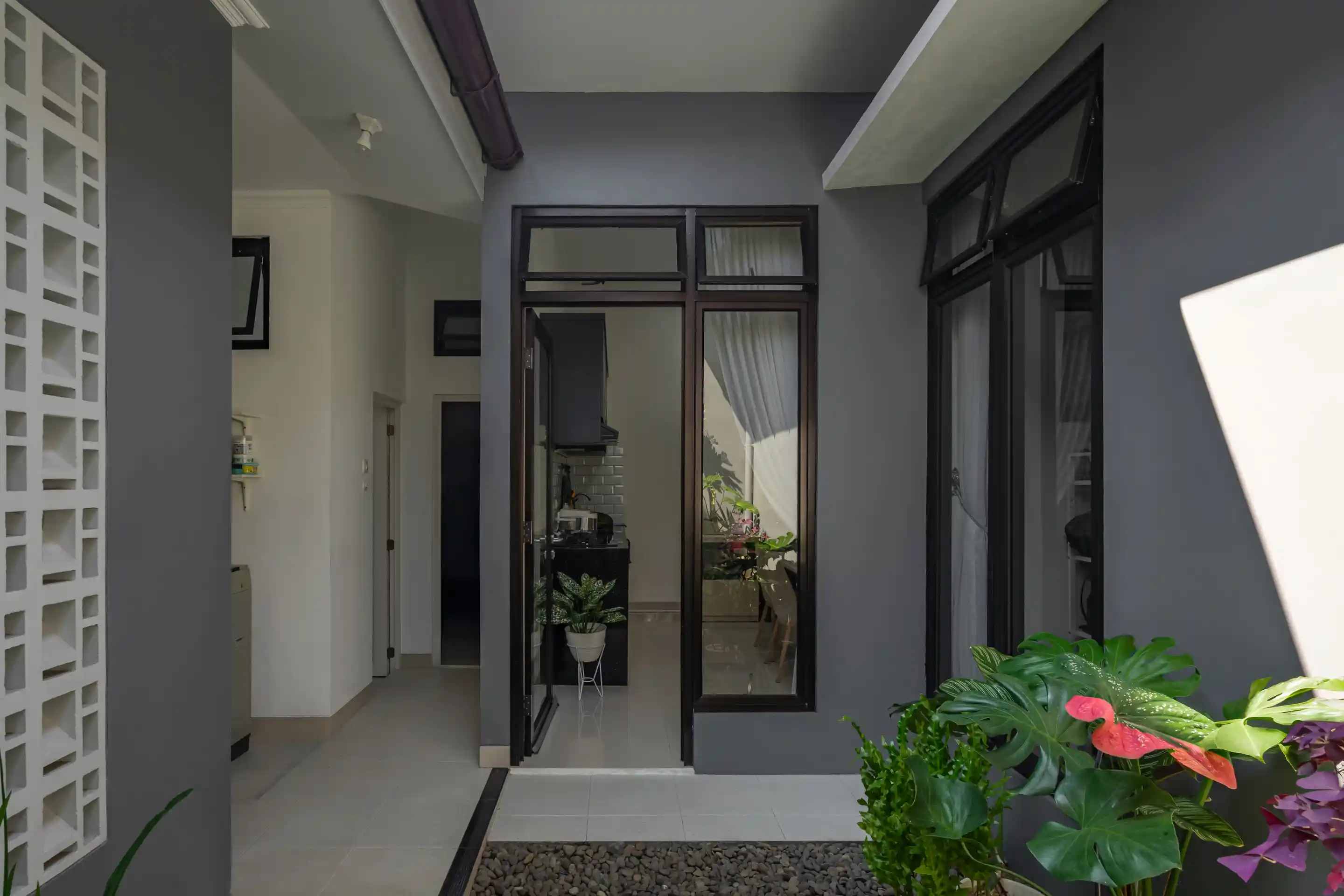
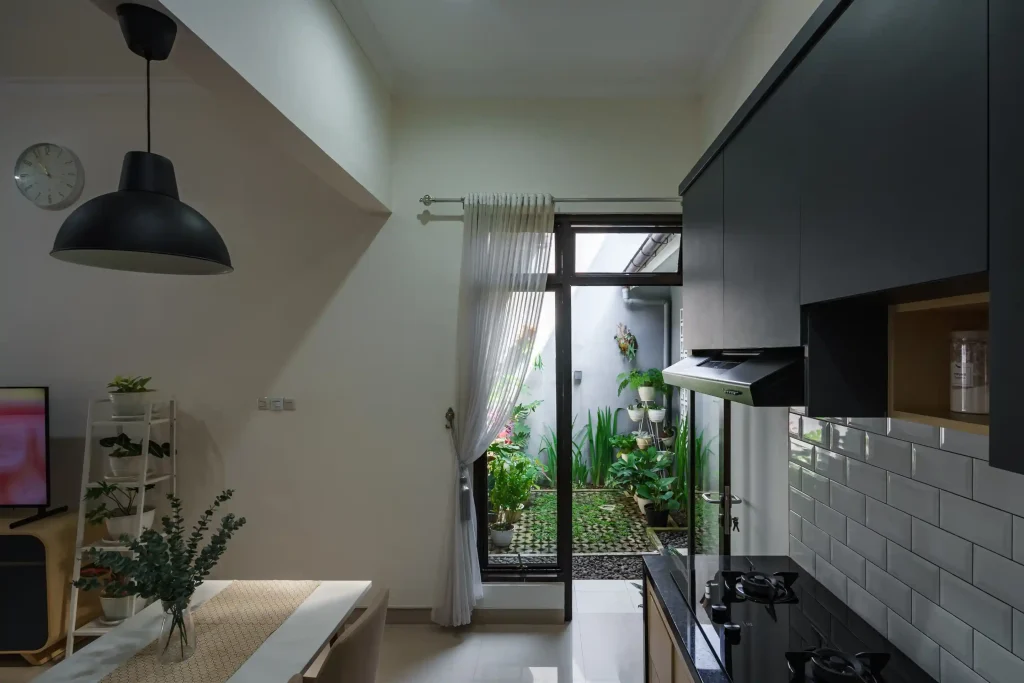
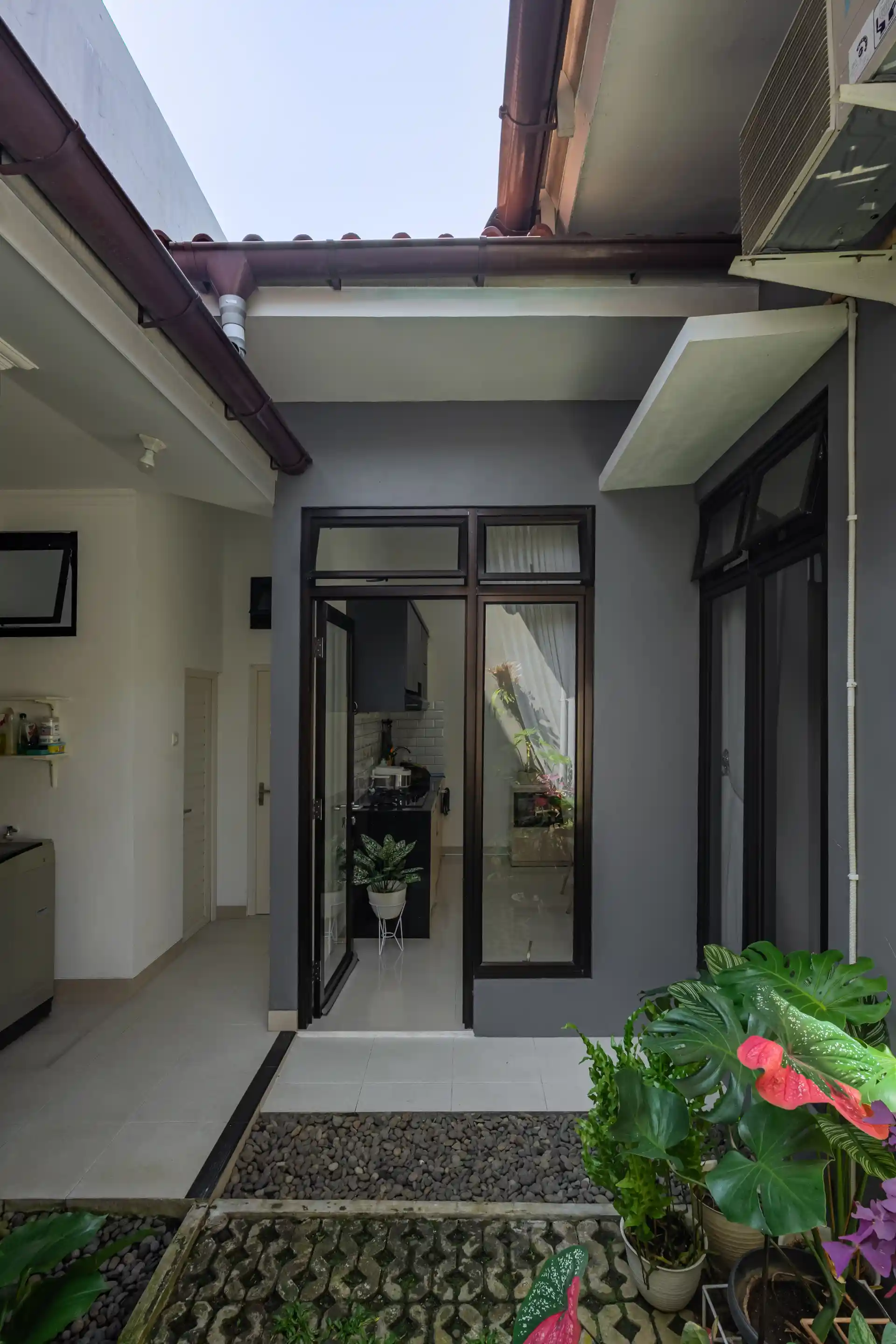
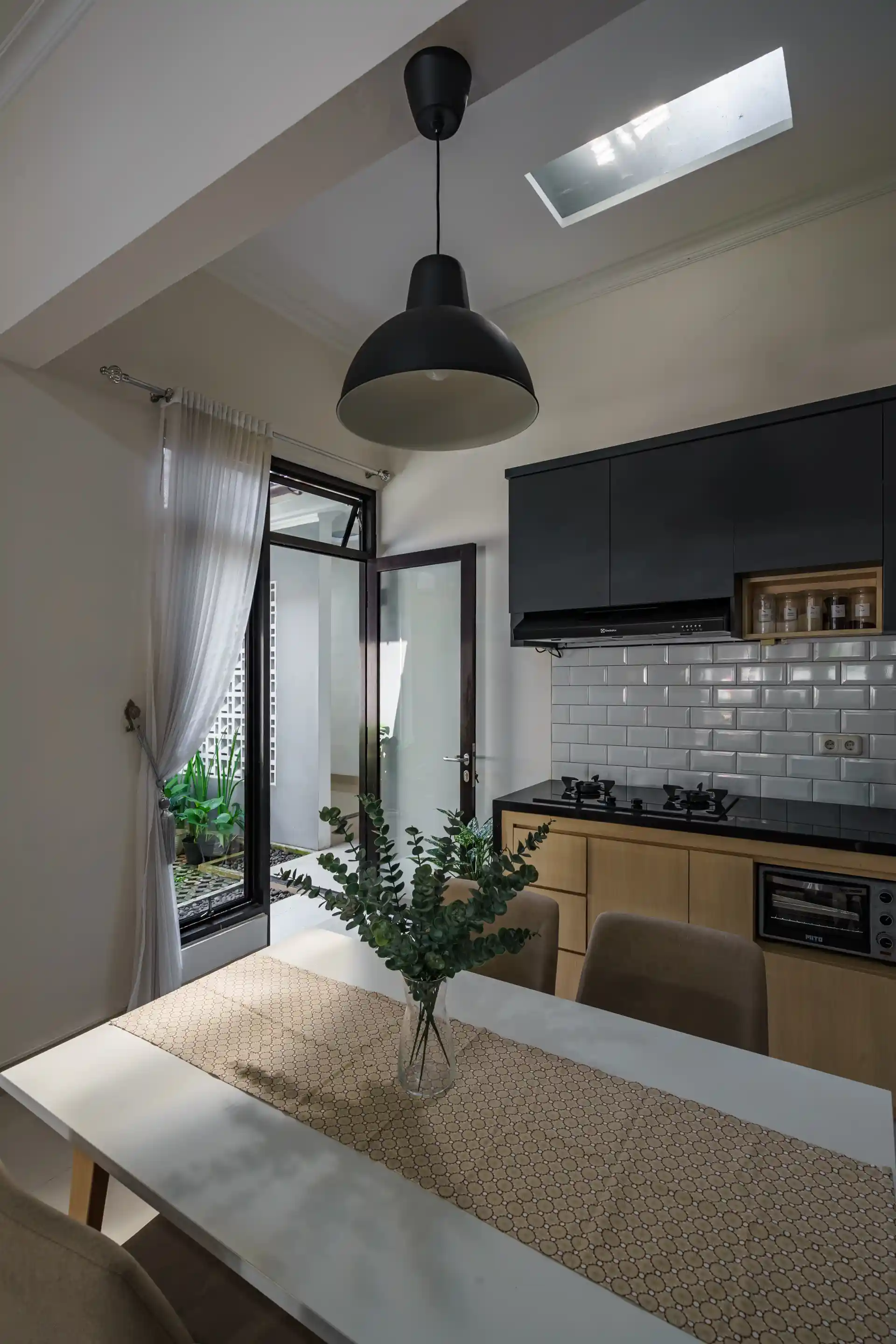
At TW House, we began designing the kitchen not only as a space for cooking, but as a living space that breathes. We placed the kitchen directly adjacent to the open area at the rear so that activities inside are always connected to the outside environment. Full glass openings are designed to bring in natural light, fresh air, and green views from the inner court, so that the kitchen never feels confined, even though it is a workspace that is used intensively every day.
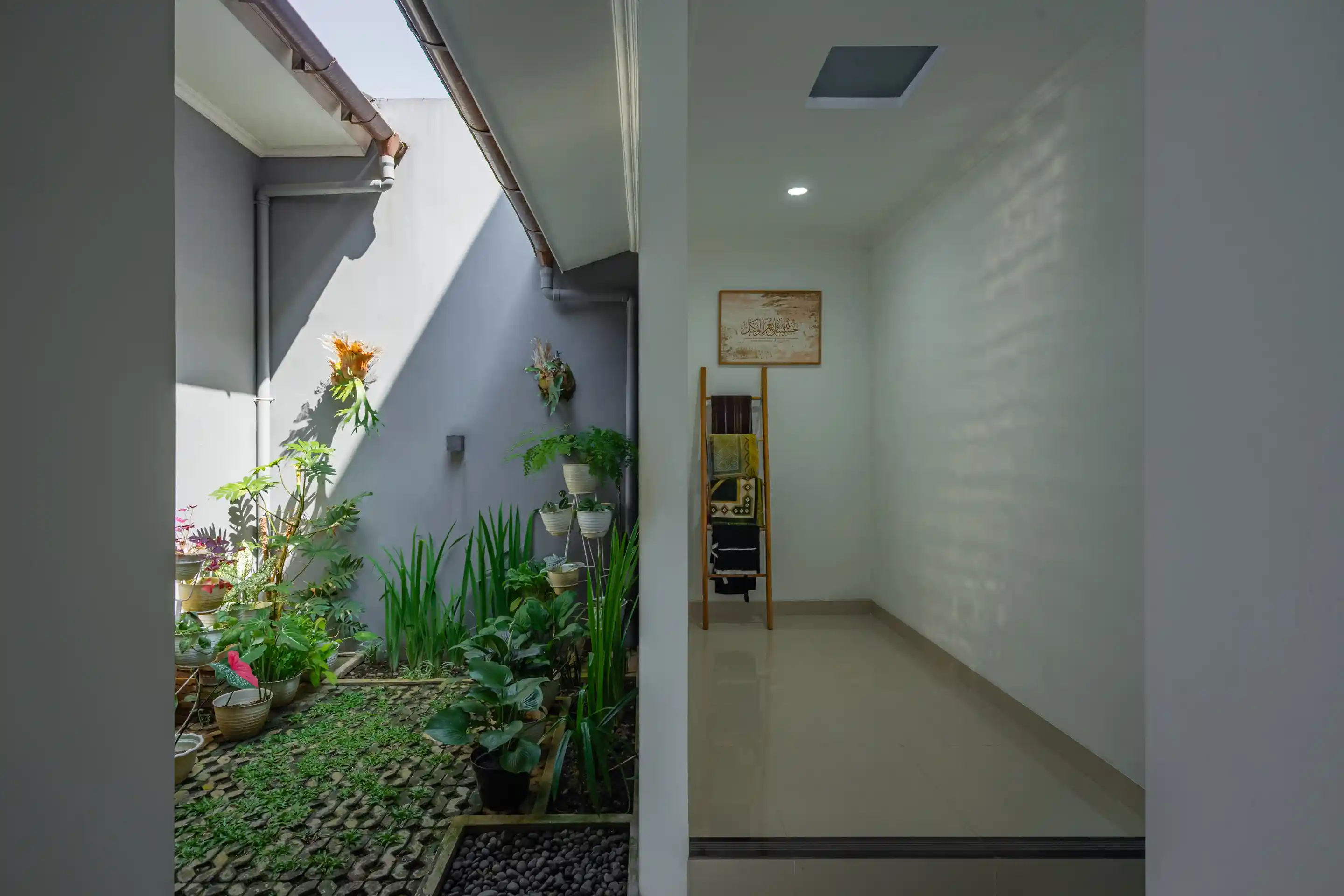
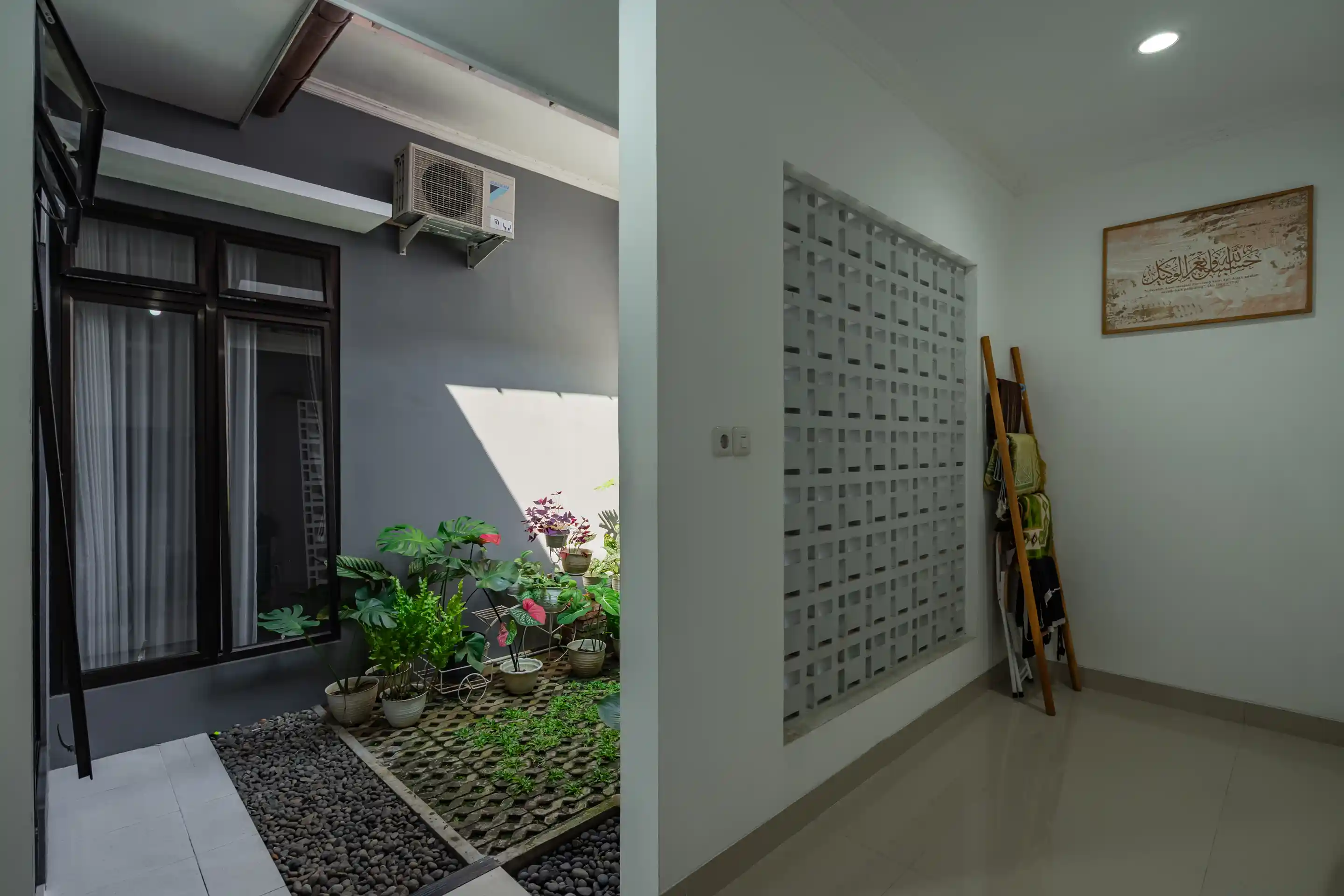
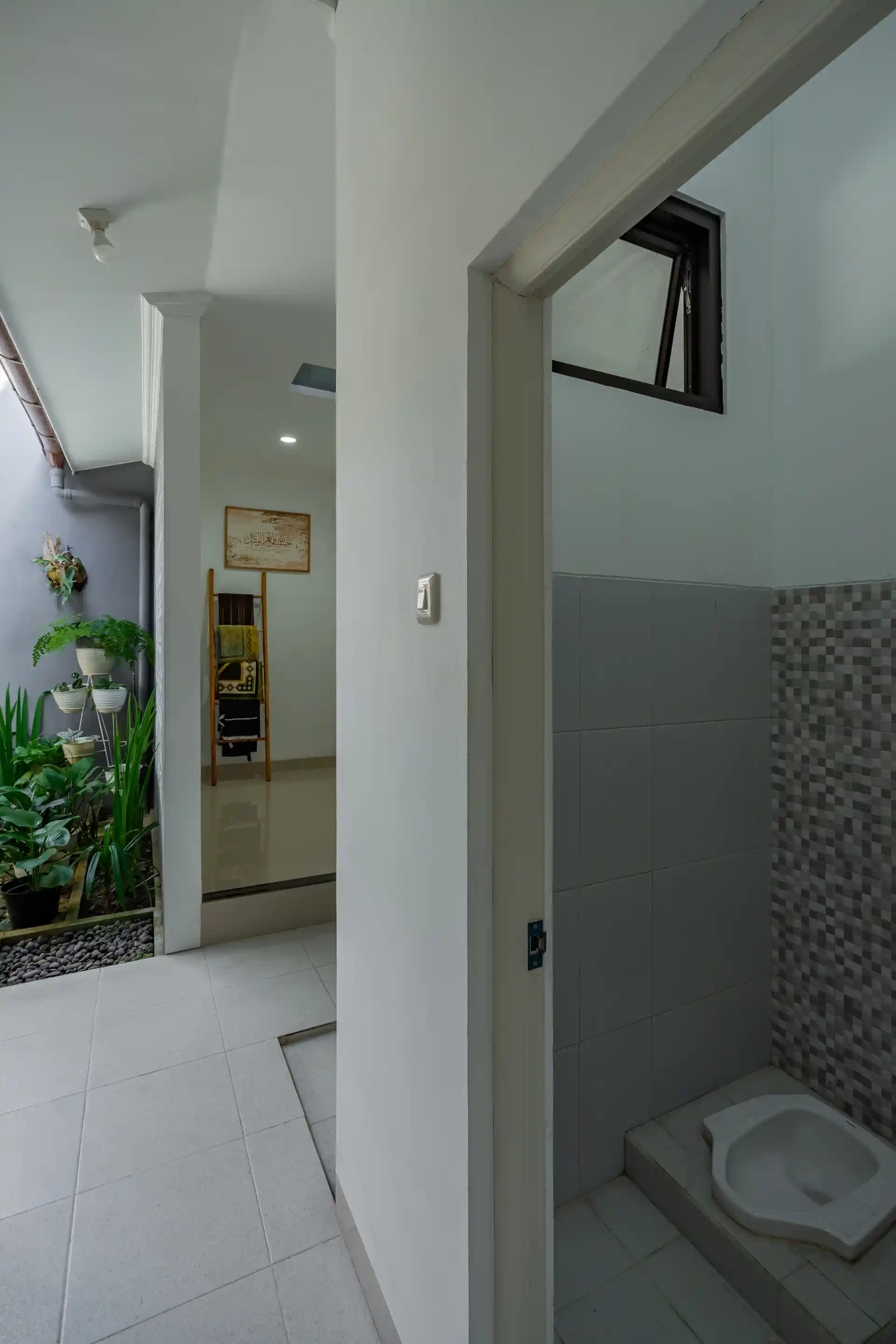
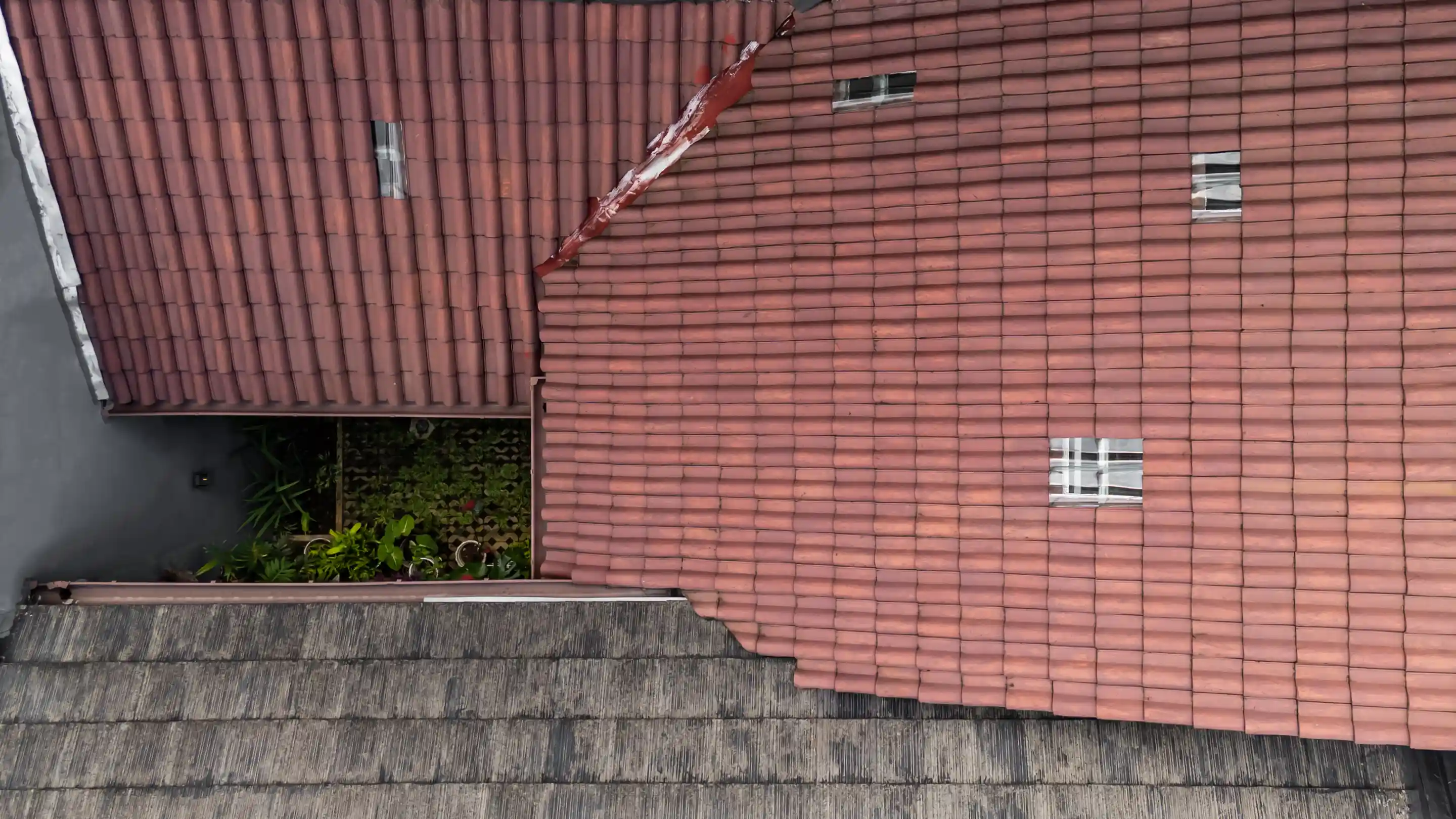
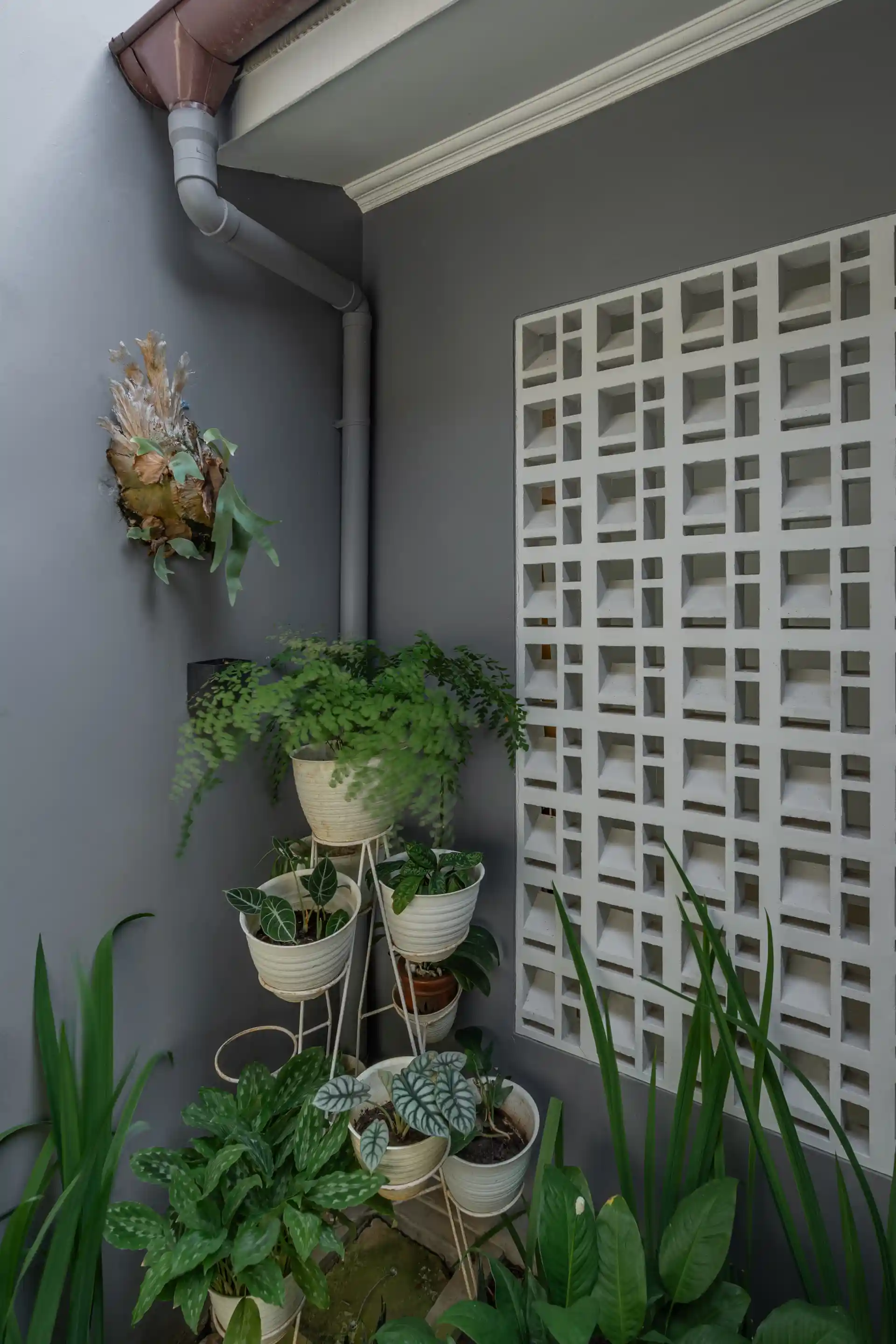
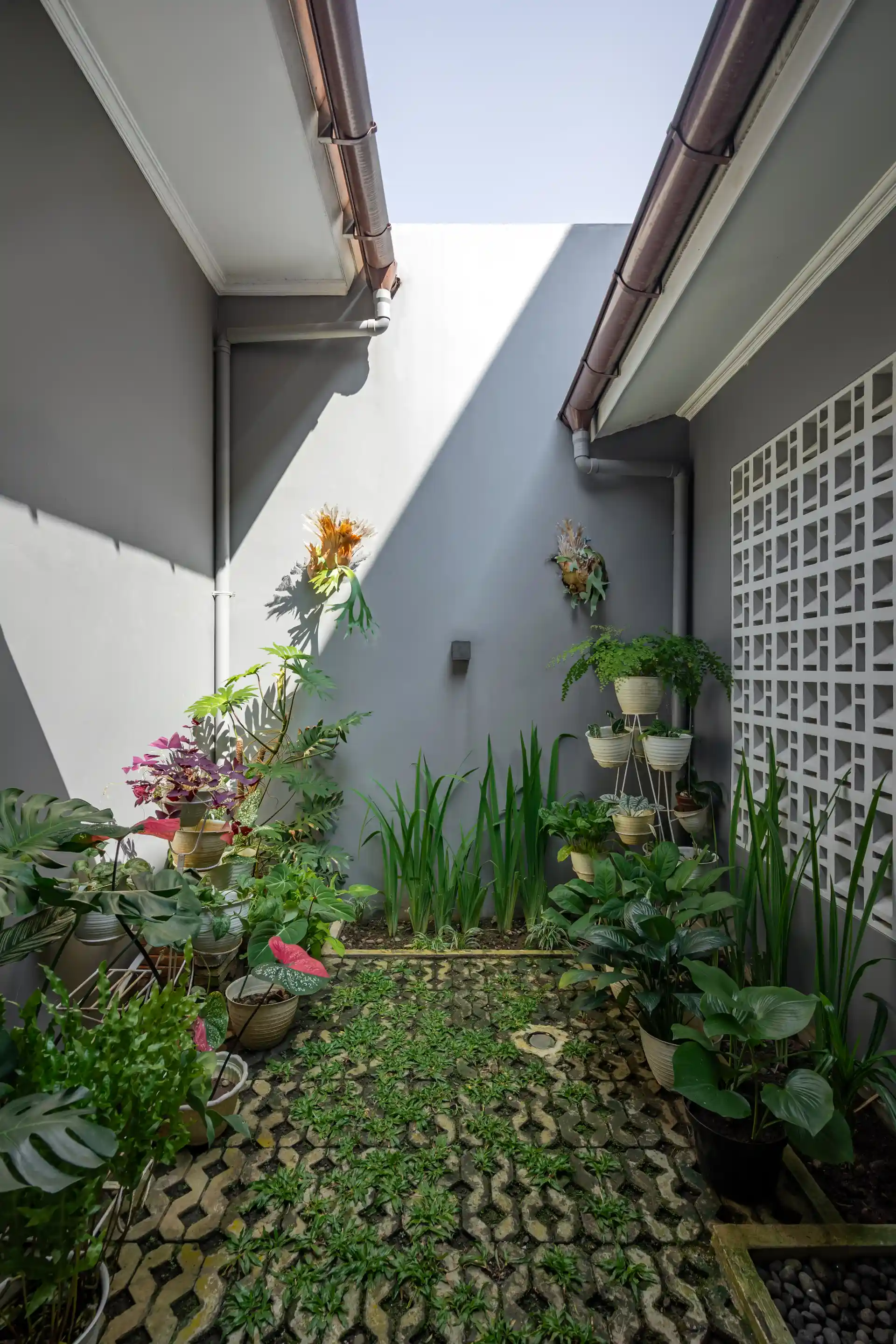
We present the inner court as an in-between space, a calming pause that connects the kitchen with the service area. Gravel, grass blocks, and plants are layered to help absorb rainwater, facilitate air circulation, and create a cool atmosphere that extends into the house. This space functions as a small, passive yet consistent lung, maintaining the microclimate of the house throughout the day.
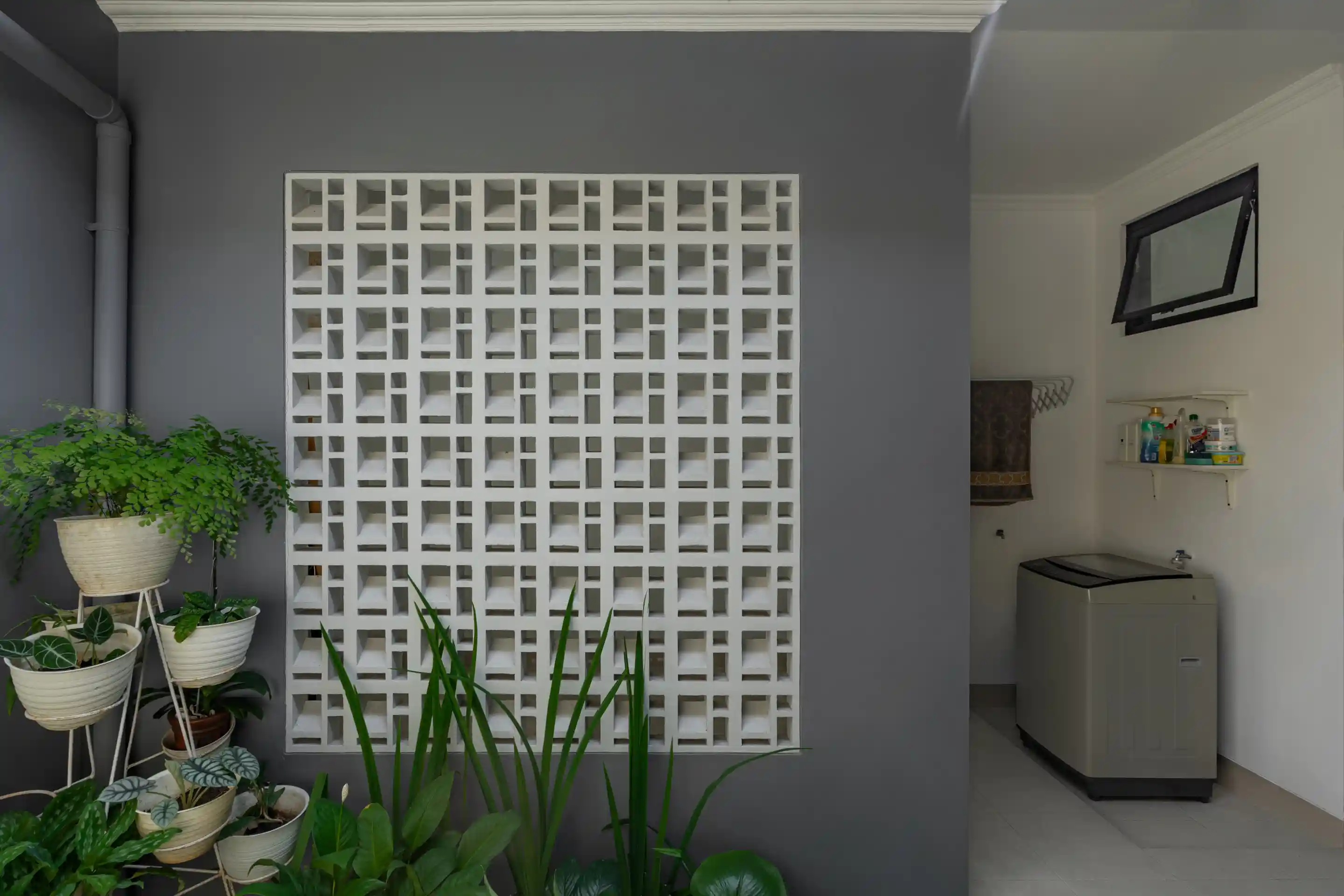
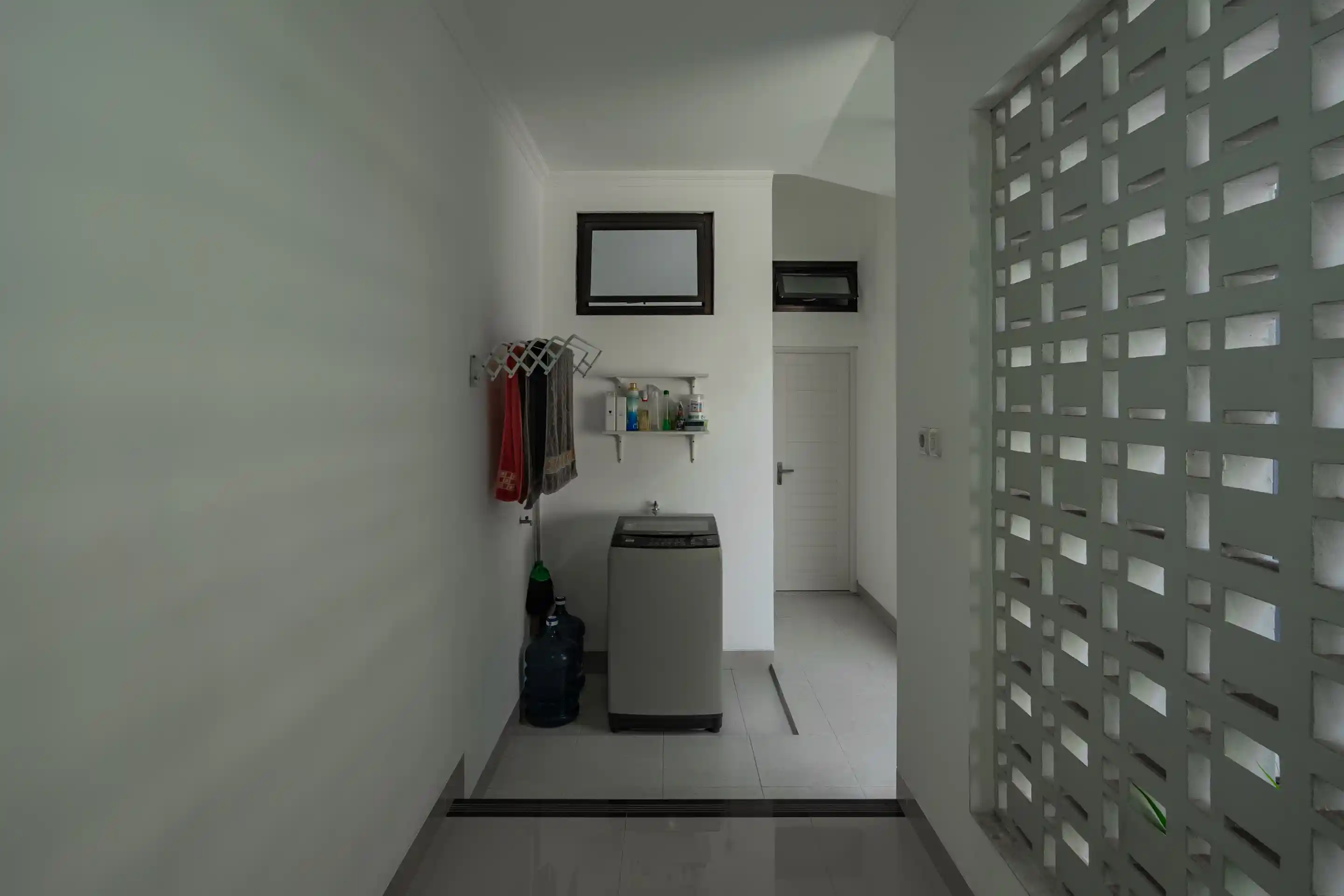
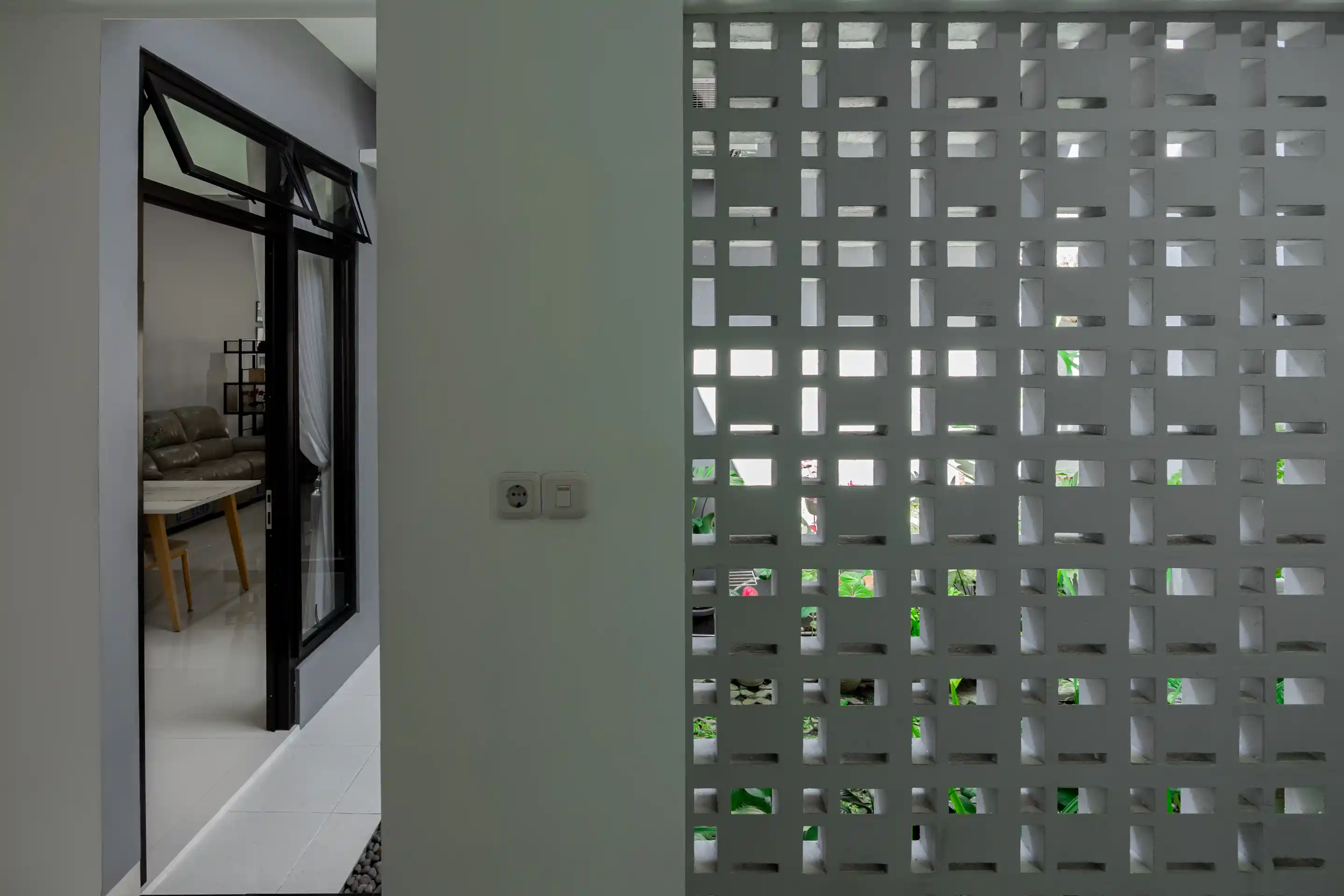
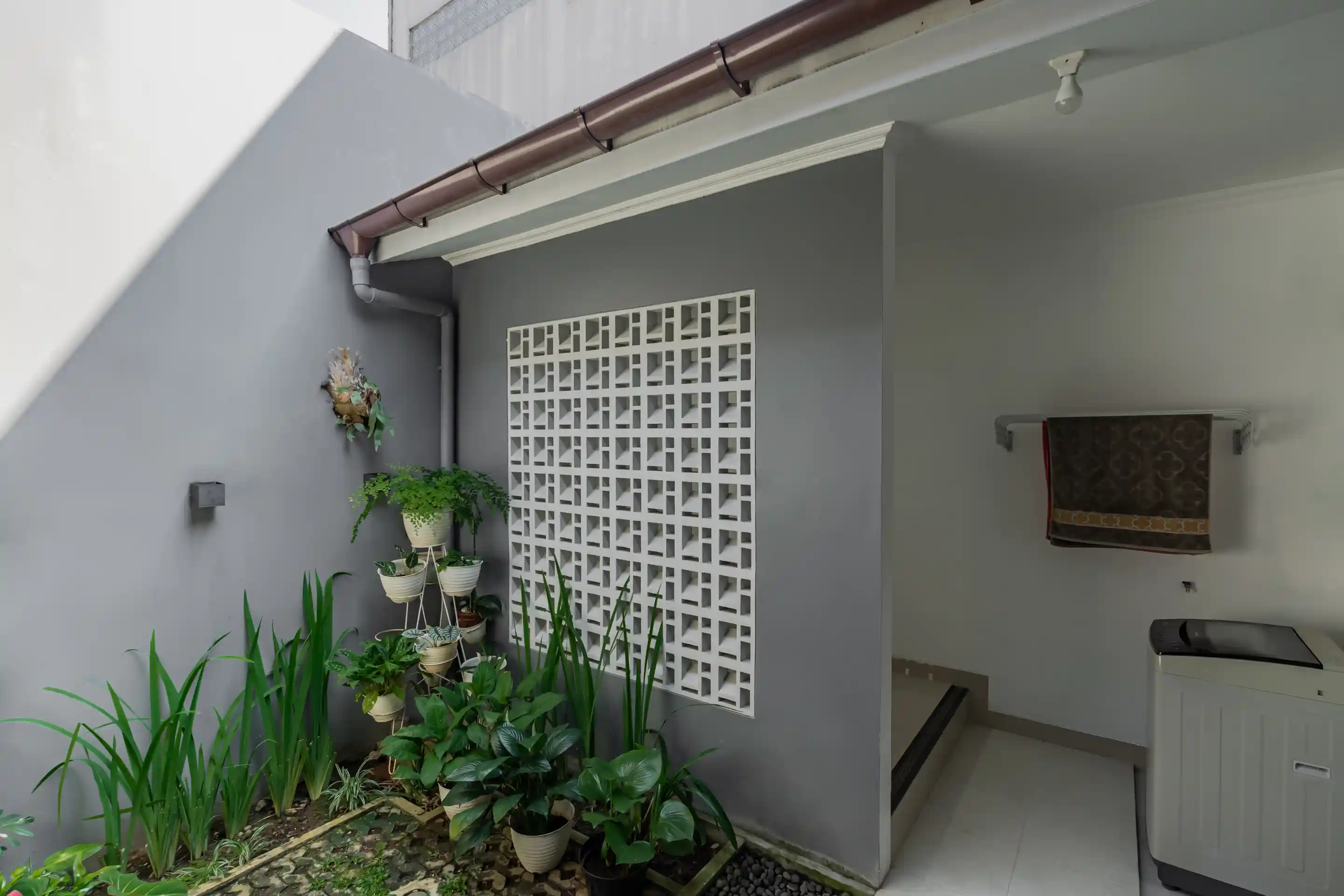
Behind the inner court, we designed the laundry and drying area with an honest and efficient approach. The roster wall plays an important role not only as a barrier, but also as a medium for light and air to enter. With this strategy, service activities remain comfortable without disturbing the visual order of the kitchen and main room. Each function runs side by side, supporting each other without needing to stand out.
We placed the prayer room close to the service area, but with a completely different atmosphere. Light enters softly through openings and rosters, creating a calm and contemplative atmosphere. Although it is located close to daily activities, the quality of the prayer room maintains enough emotional distance to provide a sense of solemnity. For us, the prayer room is not an additional space, but an important part of the rhythm of life in the house.
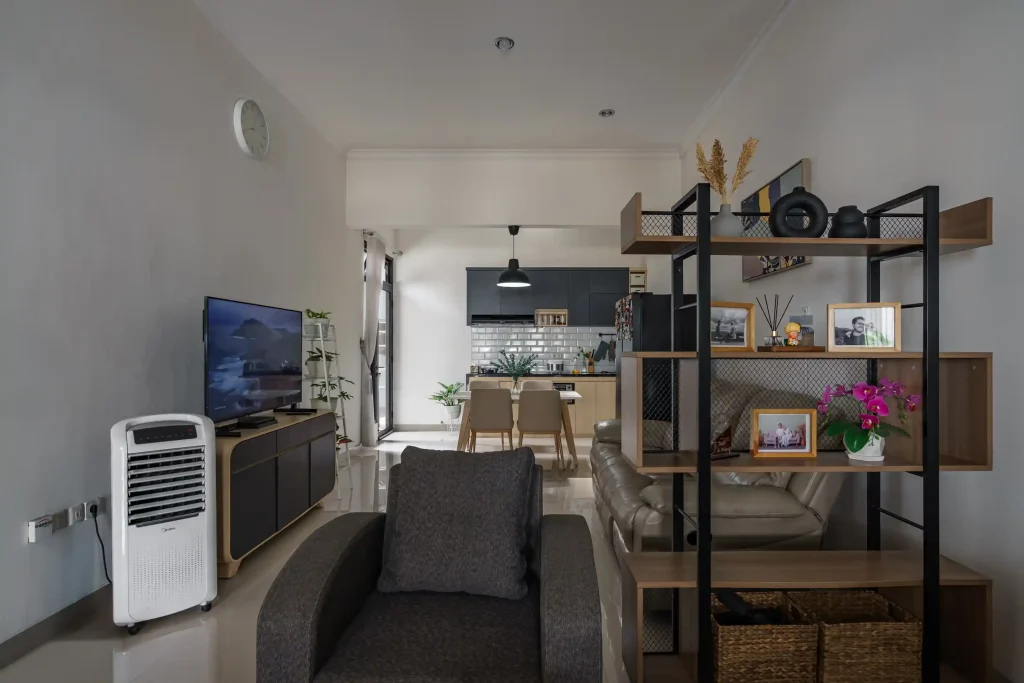
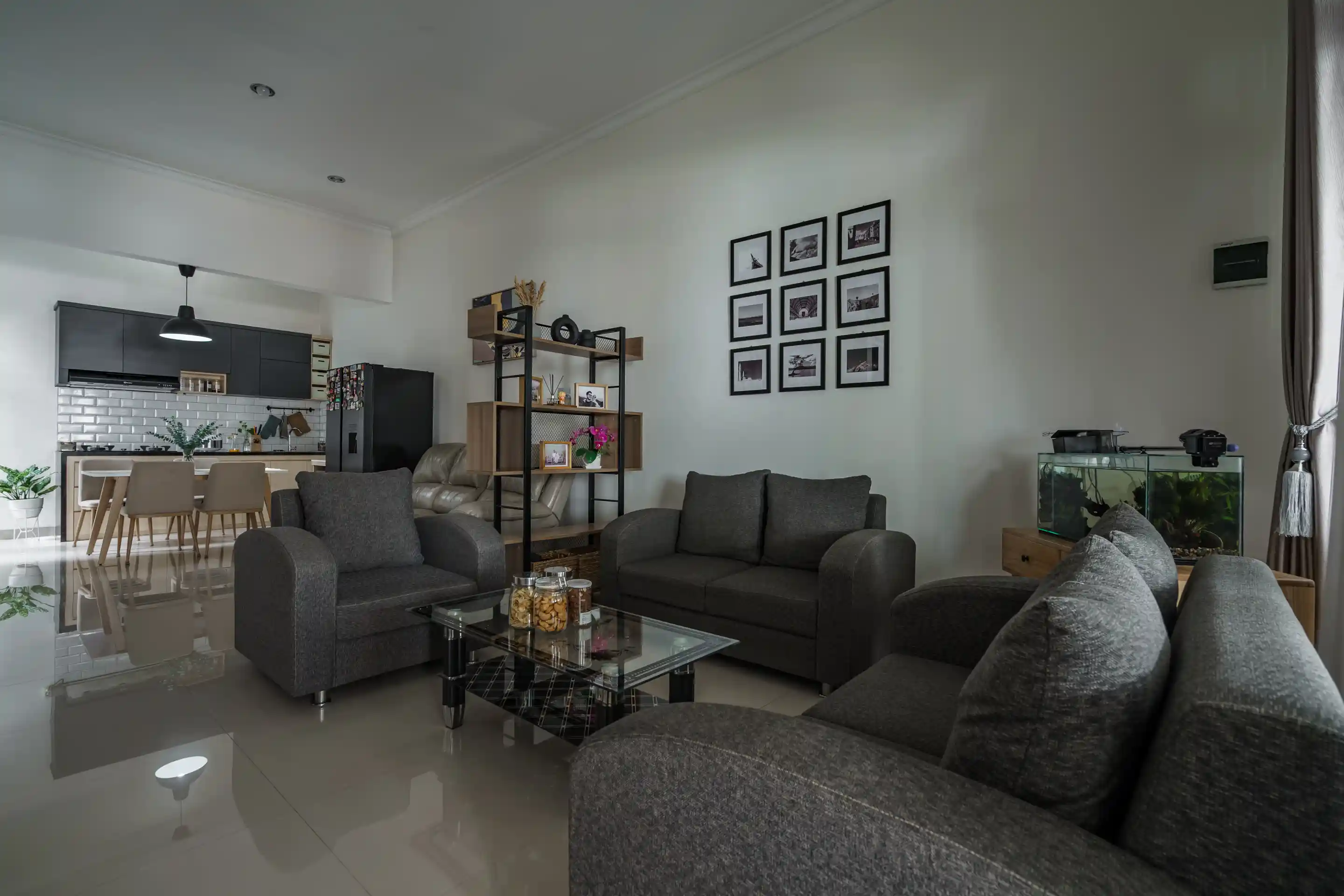
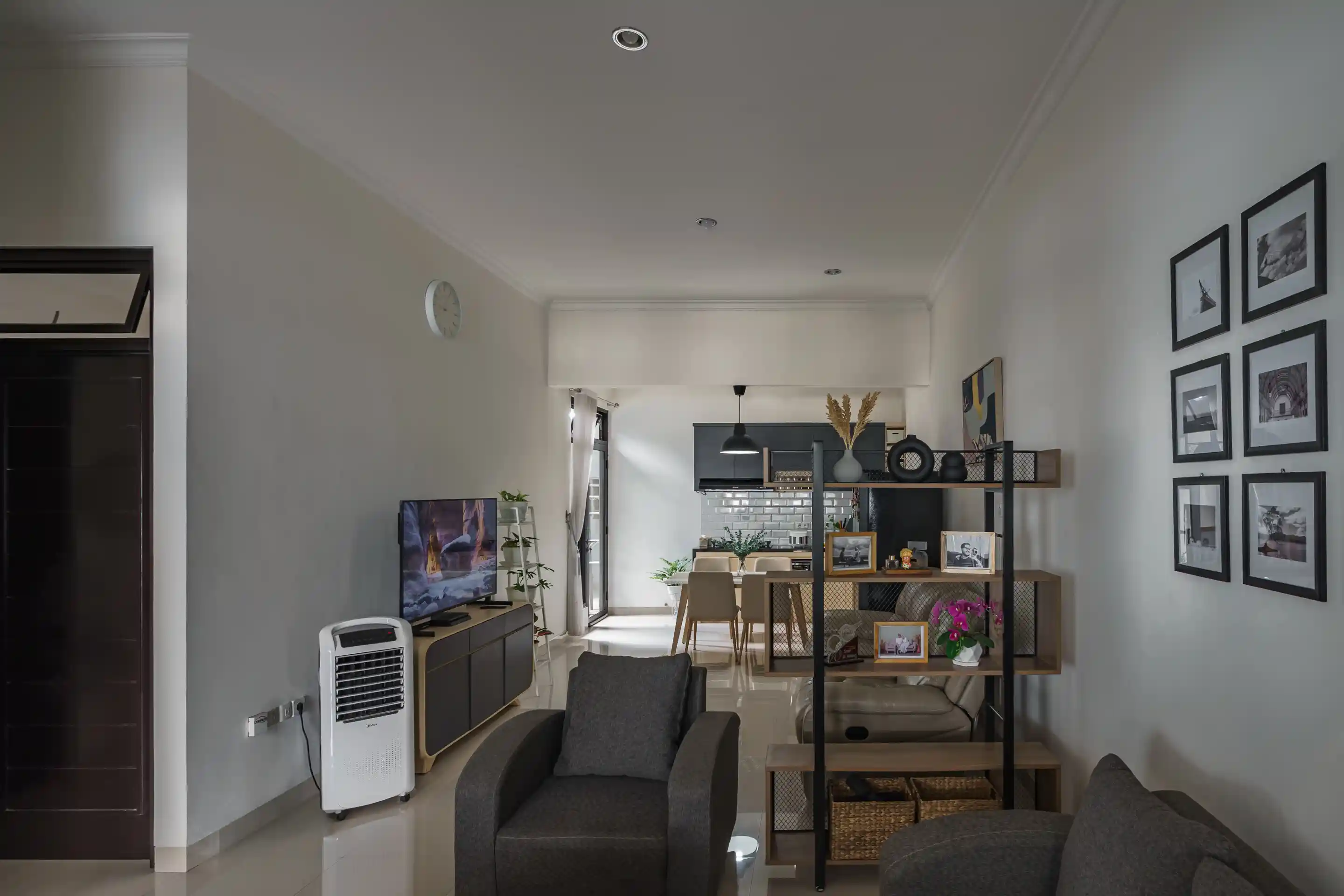
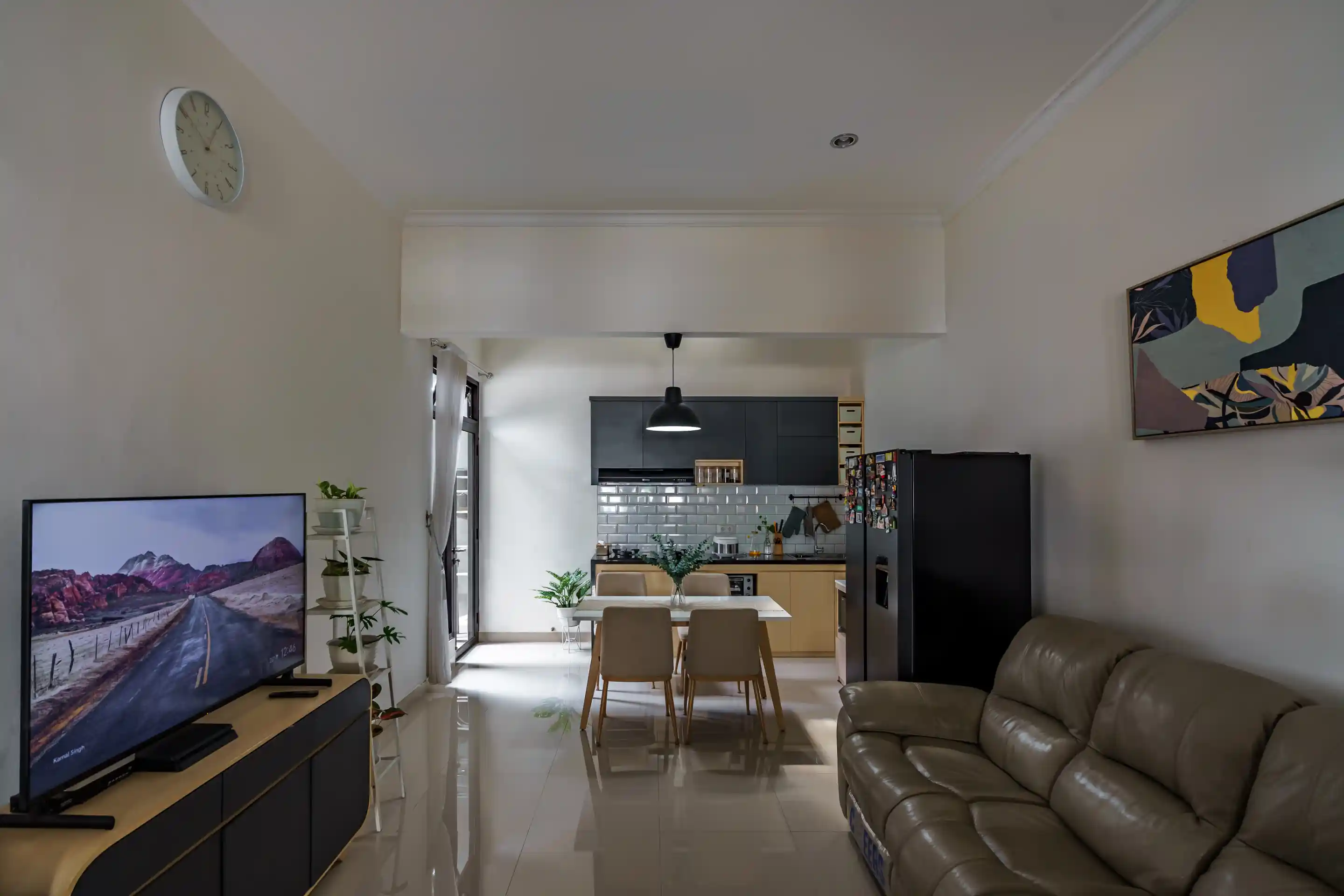
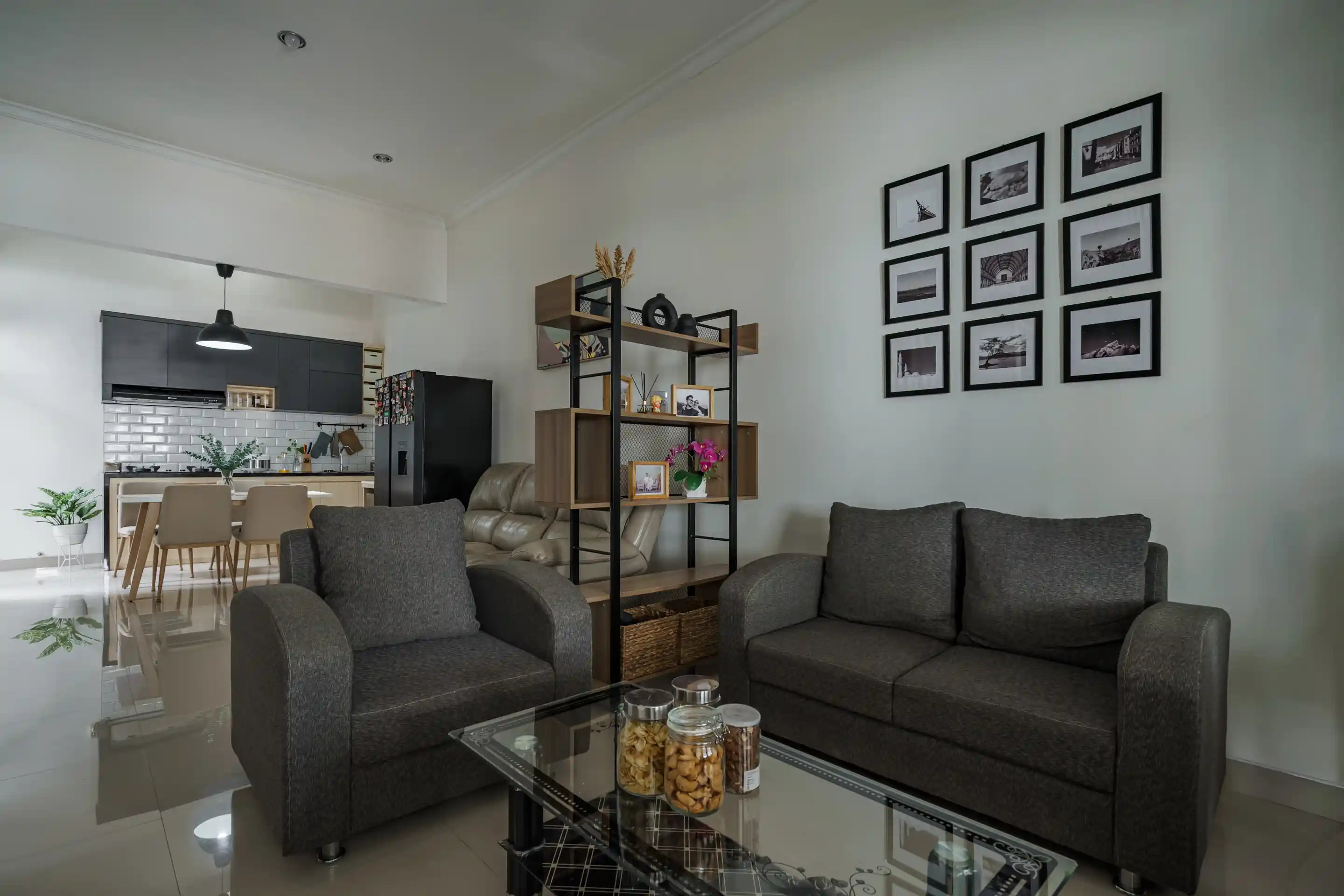
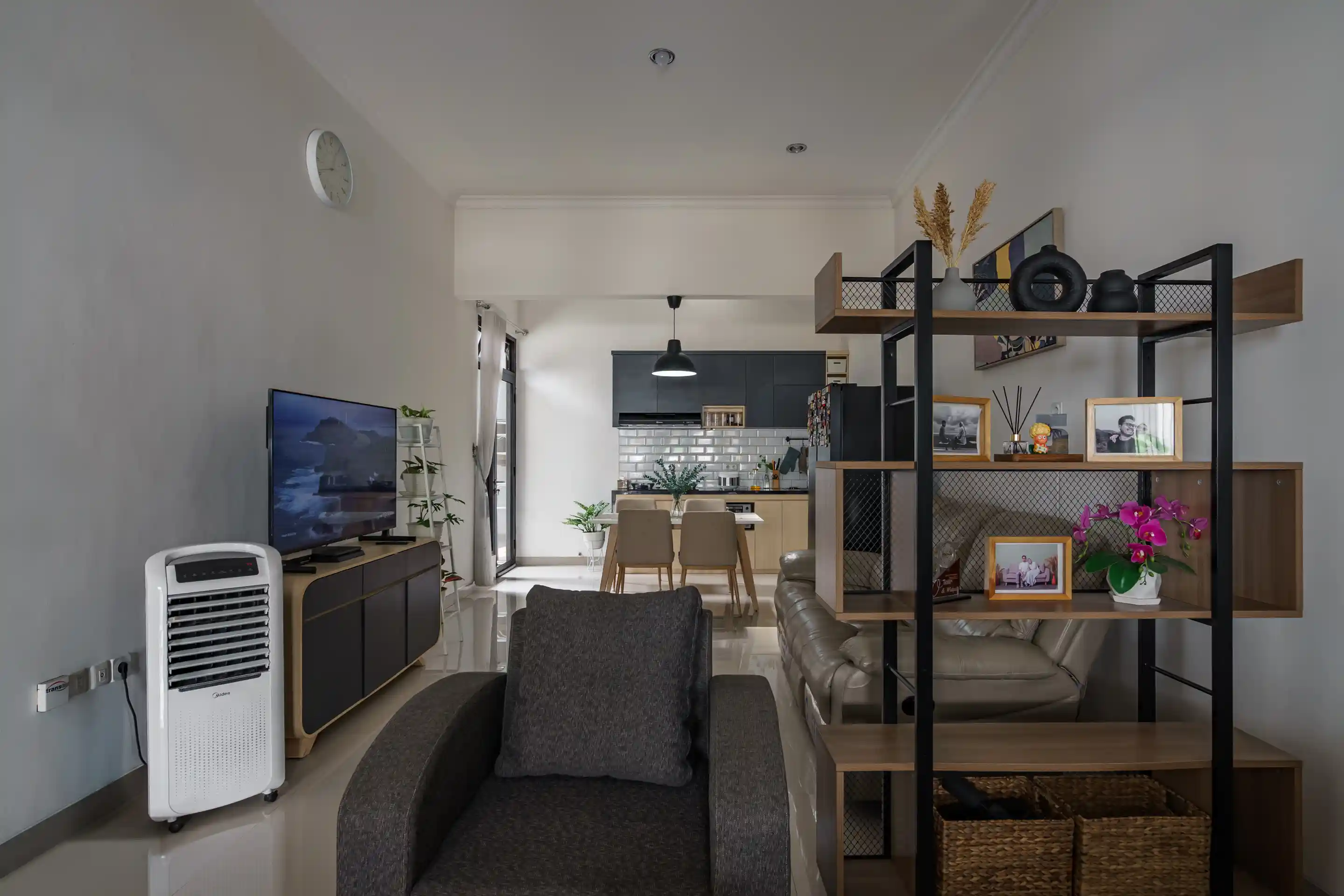
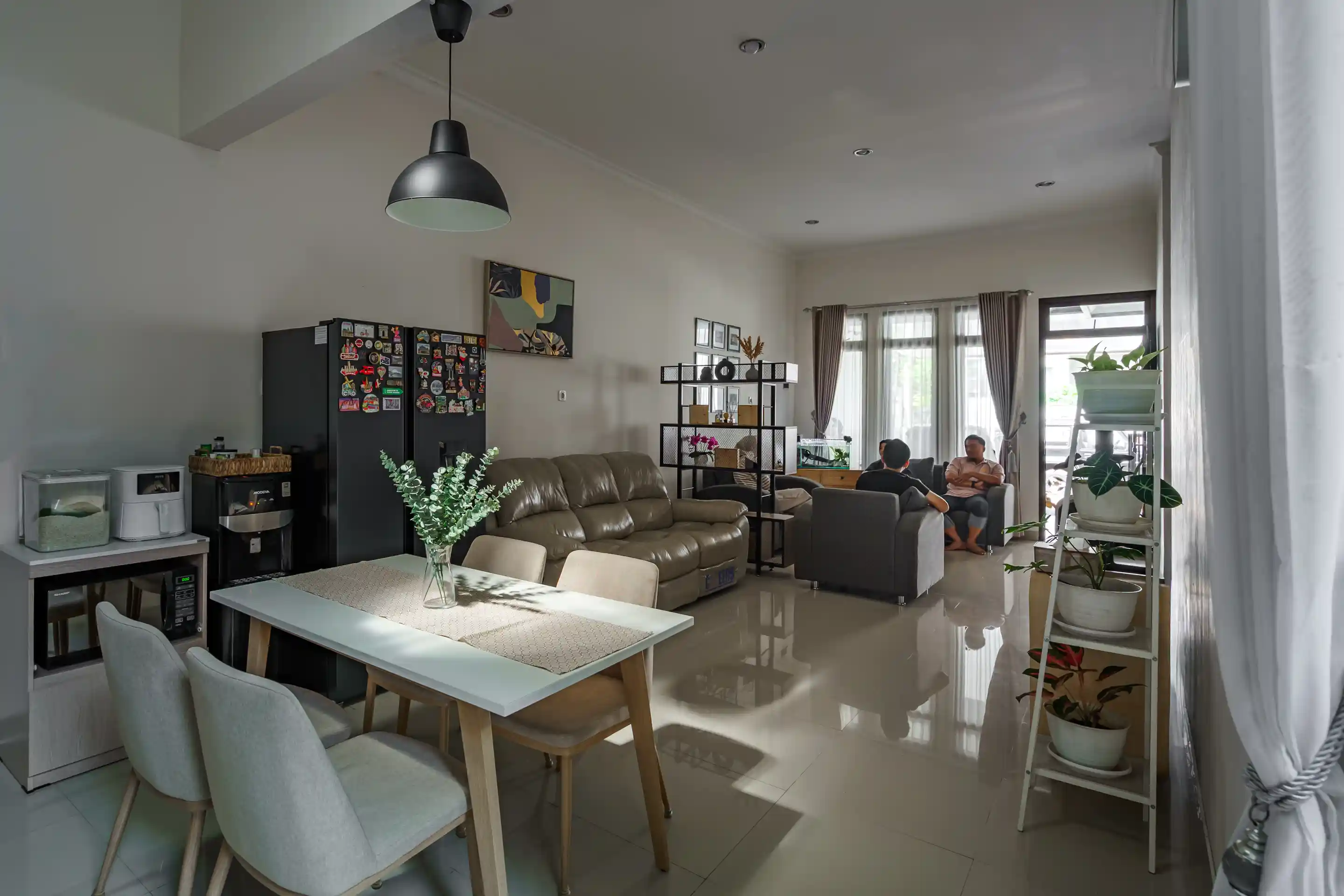
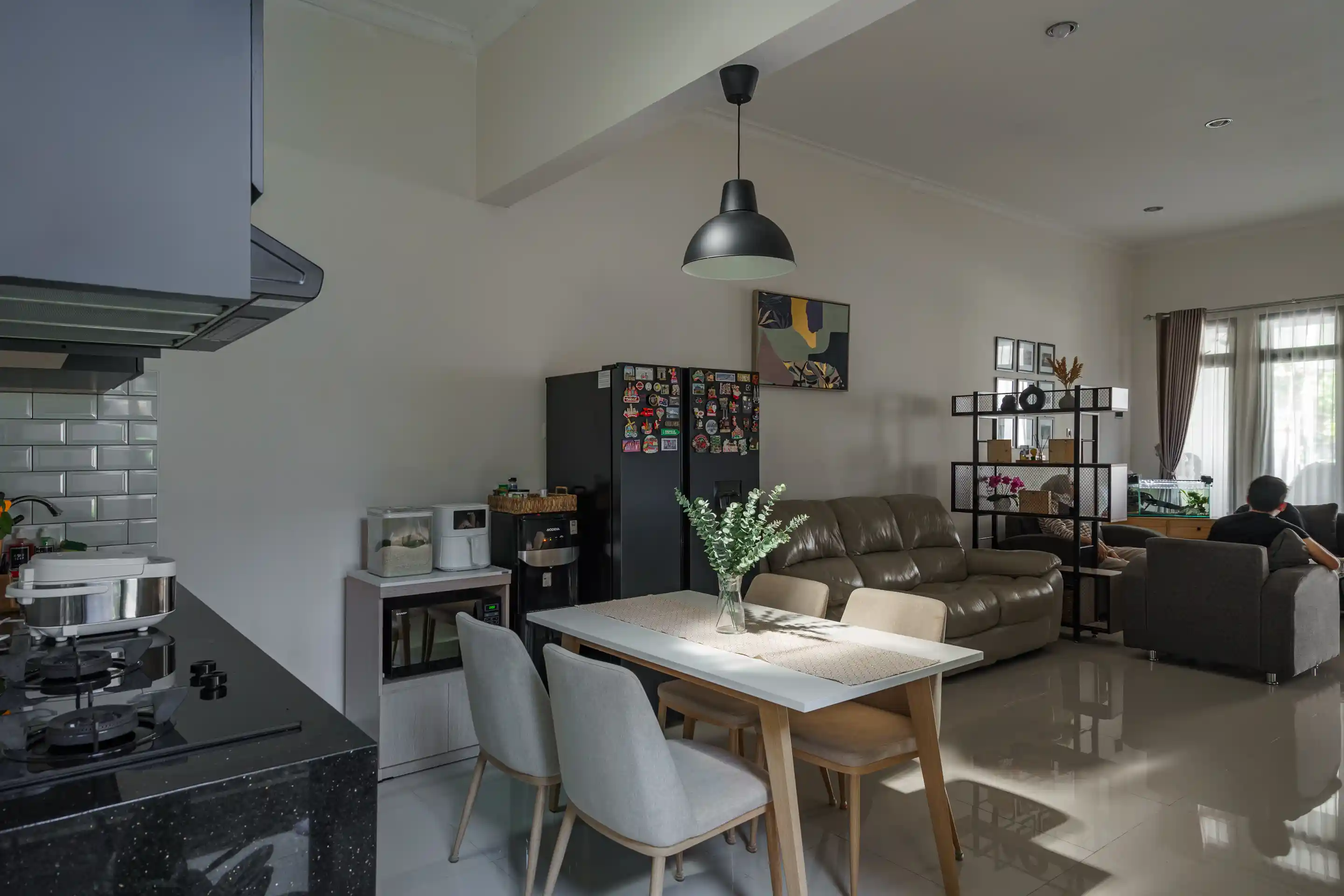
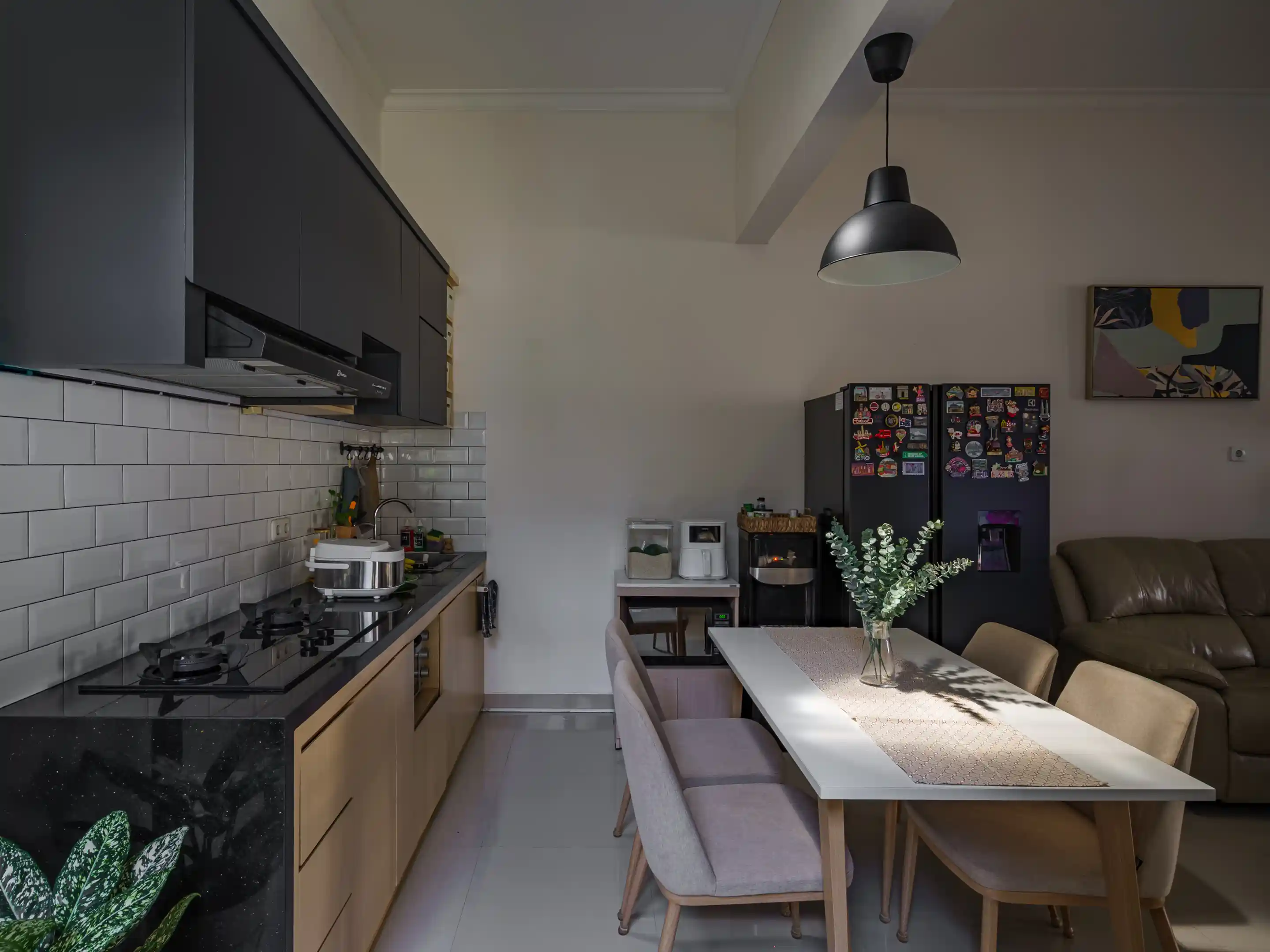
In the main area of TW House, we designed the living room, lounge, dining room, and kitchen as a single space without physical partitions. This open space approach was chosen to create a spacious impression while strengthening the interaction between activities in the house. Each space does not stand alone but is visually and functionally connected, forming a fluid and natural flow of life.
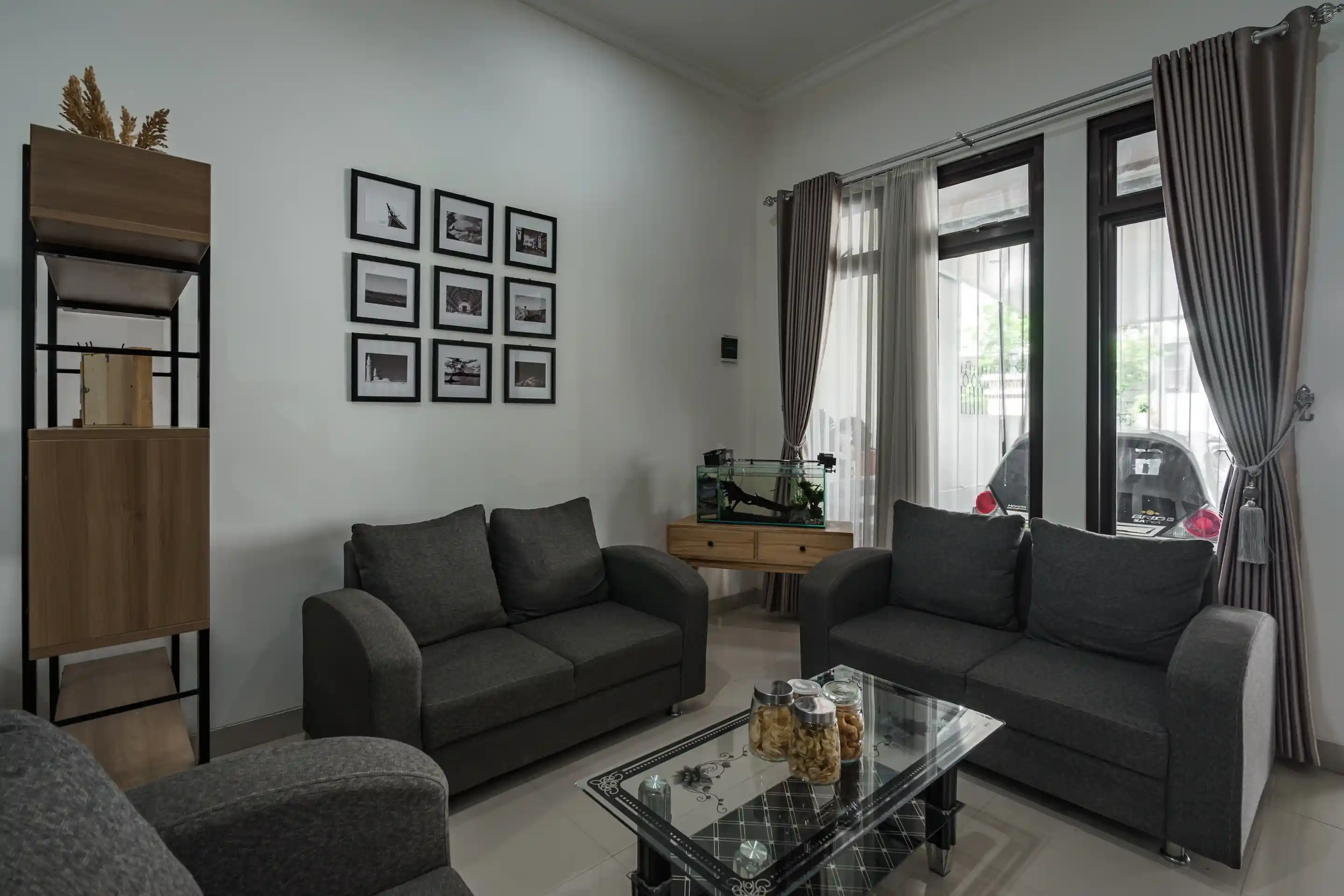
The living room is positioned as a reception point that blends into the lounge area. Without dividing walls, the boundaries between spaces are defined by the arrangement of furniture, lines of sight, and lighting composition. This area is flexible, serving a formal function when receiving guests, yet remaining comfortable as a daily gathering space for the family. Natural light from the side and rear openings keeps the room bright and warm throughout the day.
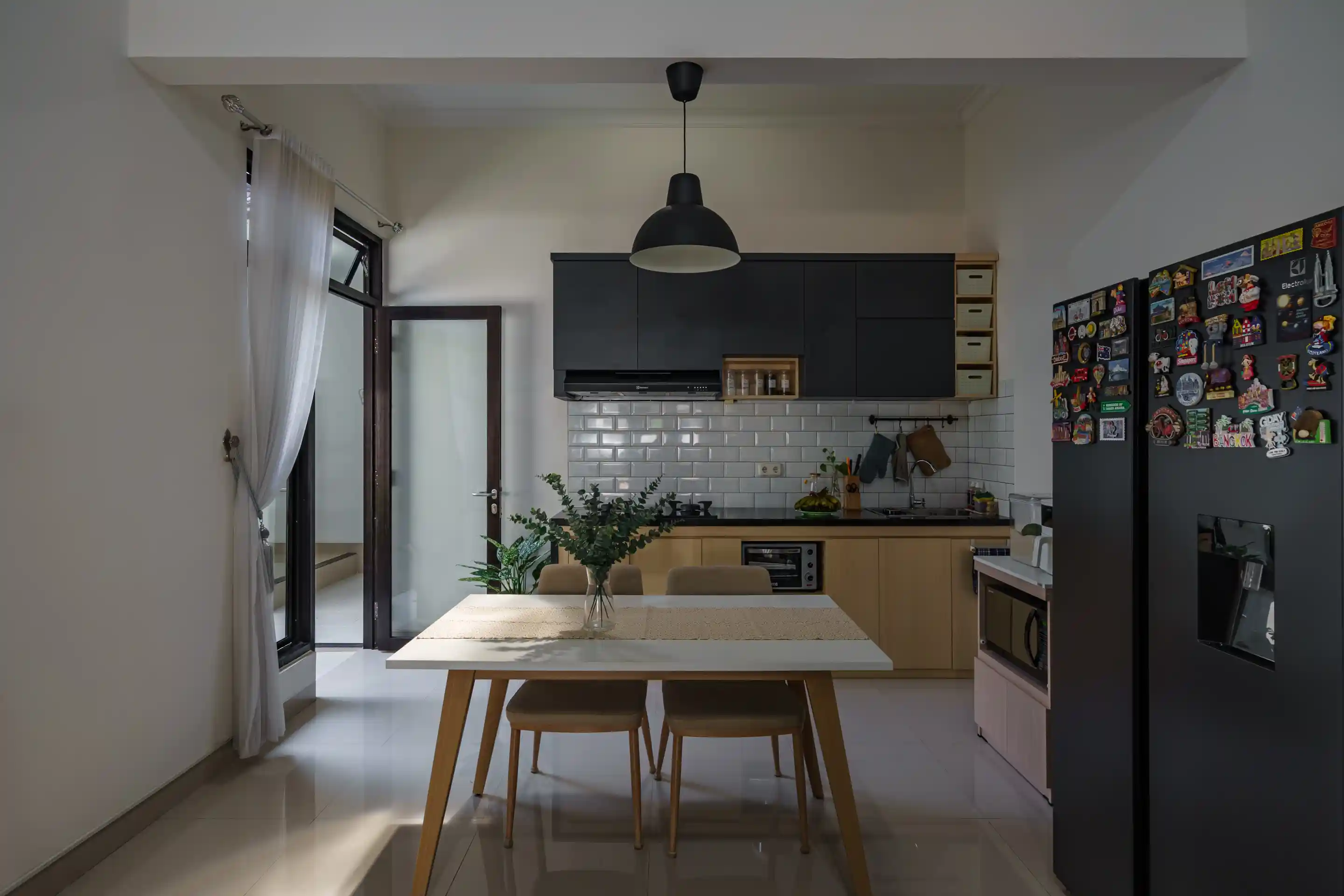
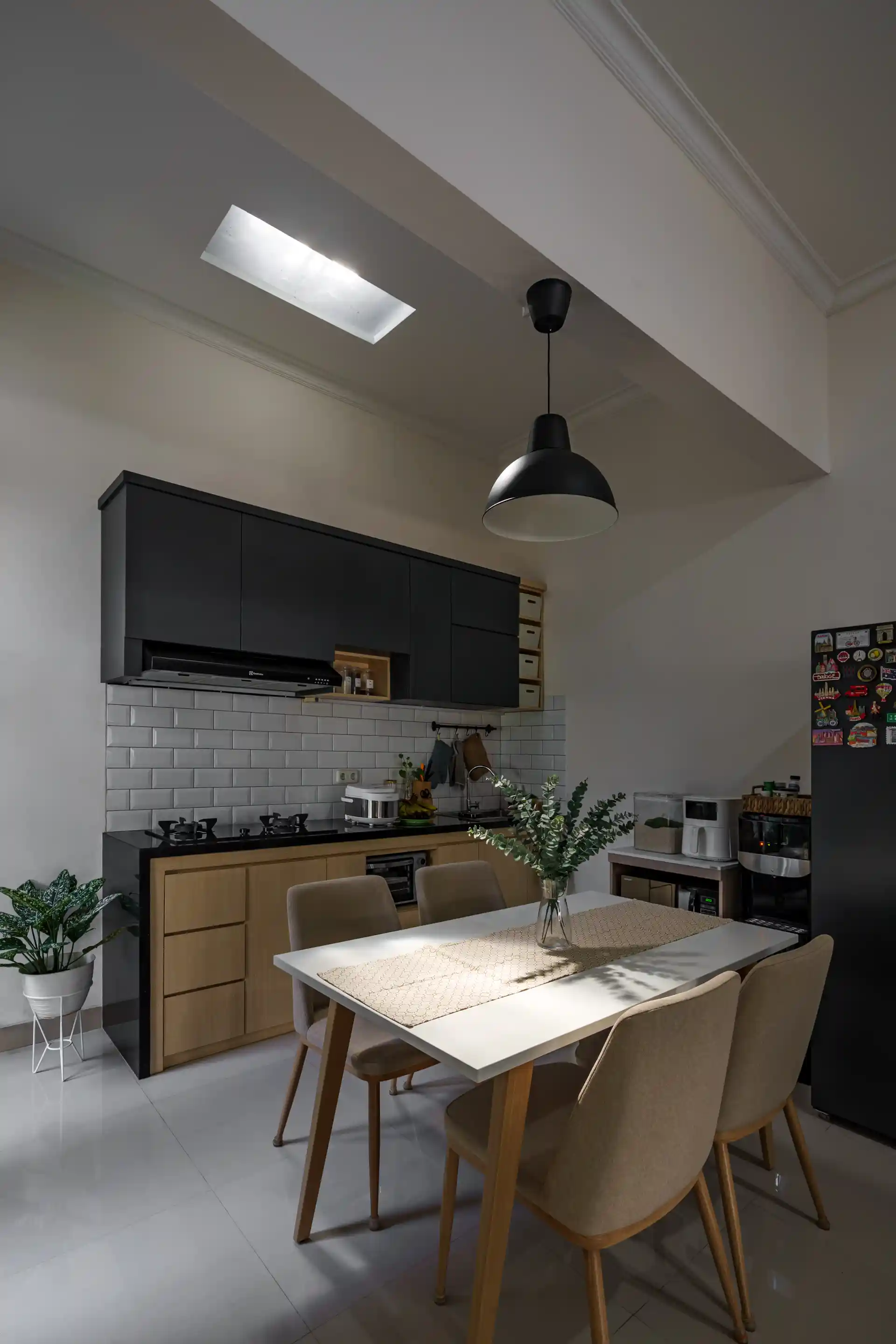
The dining room is located in the center of the composition as the hub of family activities. From this point, residents can interact directly with the living room and kitchen. The dining table not only functions as a place to eat, but also as a space for sharing stories, doing light work, and taking a short break. The open visual connection makes this space feel inclusive and lively.
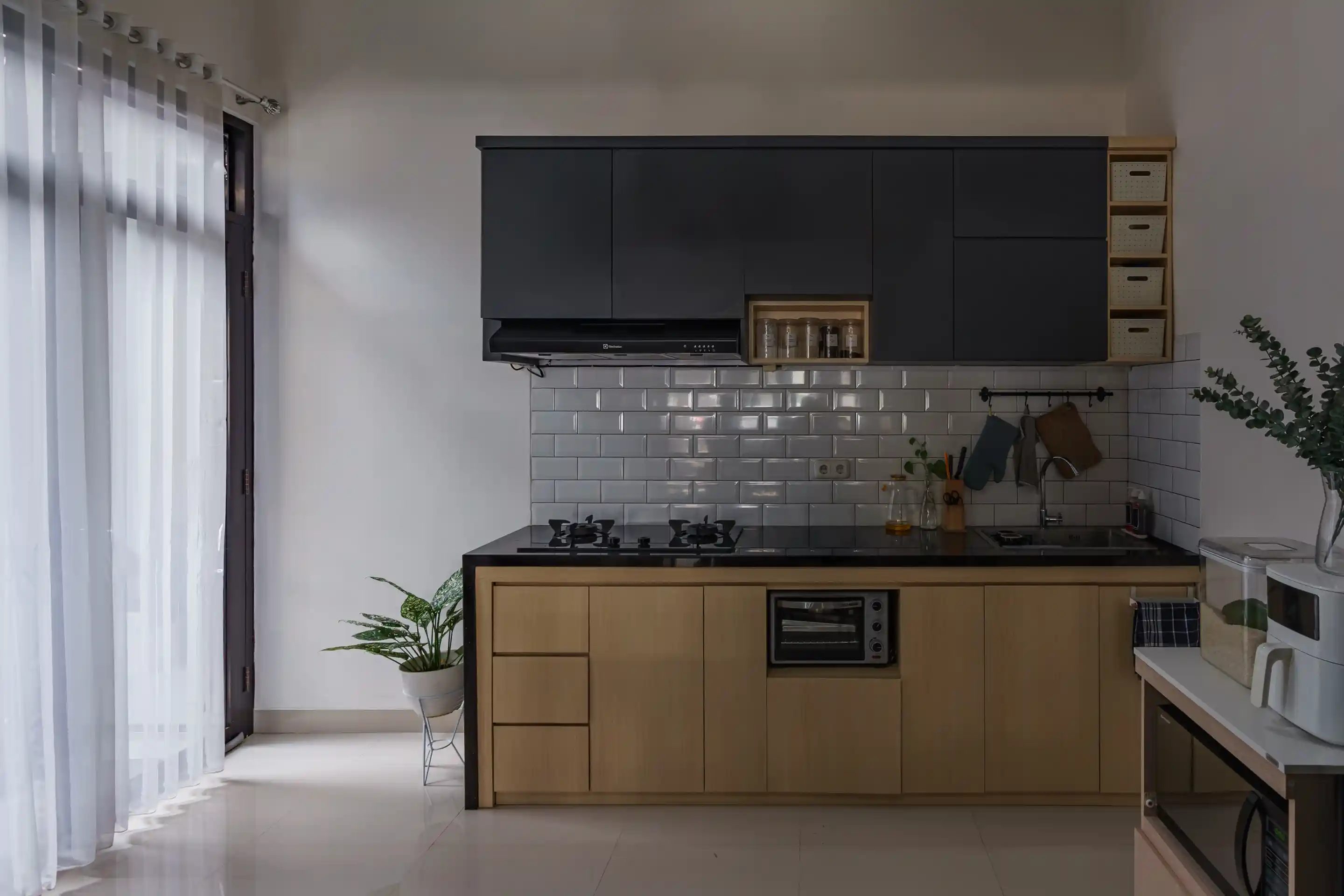
The open kitchen is designed as an integral part of the main space, not as a hidden service area. The kitchen’s position allows cooking activities to remain connected to the dining room and lounge area. Openings to the outdoor area at the rear ensure the kitchen remains fresh, bright, and comfortable even when used intensively. With this barrier-free approach, the kitchen transforms into an active social space, in line with the lifestyle of the TW House residents.